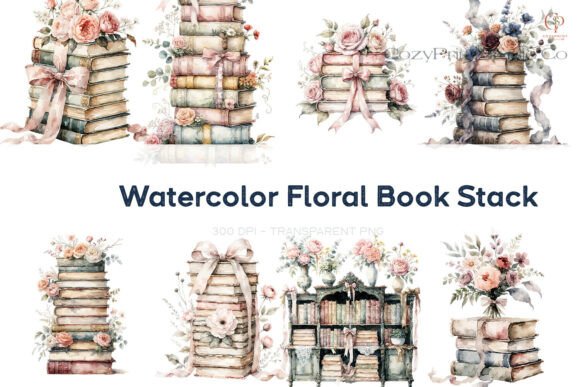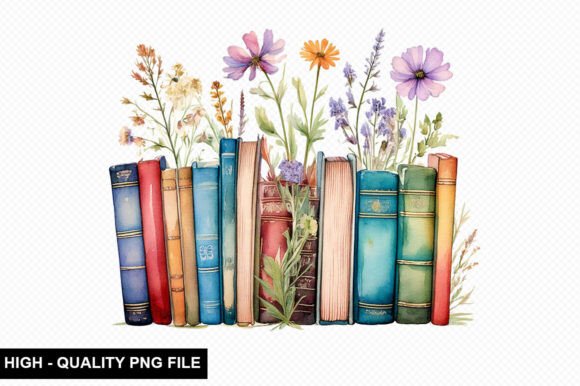
Watercolor Floral Book Clipart: A Practical Asset for Creative Projects
In the landscape of digital design, where vector precision often dominates, there remains a distinct and enduring demand for organic textures. Watercolor Floral Book Clipart addresses this specific niche by merging the tactile warmth of hand-painted florals with the structured iconography of stacked books. For professionals ranging from independent publishers to small business owners creating merchandise, this type of asset offers more than just a decorative element; it provides a cohesive visual language that bridges the gap between vintage aesthetics and modern digital utility. Unlike generic stock photography or rigid vector illustrations, high-quality watercolor clipart introduces a layer of human imperfection that resonates deeply with audiences seeking authenticity.
The value of this specific design lies in its composition. By combining soft, bleeding petals with the geometric stability of books, the image creates a balanced focal point suitable for various applications. Whether used as a central motif on a greeting card or a subtle watermark on a blog post, the Watercolor Floral Book Clipart serves as a versatile tool that elevates the perceived quality of a project without requiring extensive custom illustration work.
Technical Specifications and Usability
When evaluating digital assets, technical specifications are the foundation of their practical application. The primary advantage of this resource is its format: a high-resolution PNG file saved at 300 DPI. This resolution is critical for print-based projects. Many free or low-cost clipart options are limited to 72 DPI, which results in pixelation when printed on physical media such as mugs, t-shirts, or invitations. The 300 DPI standard ensures that the delicate brushstrokes and fine details of the watercolor flowers remain crisp and clear, even when scaled up for larger formats like sublimation printing or large-format signage.
Furthermore, the inclusion of a transparent background significantly enhances workflow efficiency. In professional design software, working with images that have white backgrounds requires additional time to mask or erase unwanted areas. With a pre-rendered transparent background, designers can drop the Watercolor Floral Book Clipart directly onto any colored canvas, pattern, or photograph. This seamless integration allows for immediate experimentation with layering, blending modes, and color adjustments, streamlining the creative process for freelancers and marketing teams alike.
Aesthetic Qualities and Design Consistency
The aesthetic appeal of watercolor art stems from its fluidity and lack of hard edges. In the context of book-themed designs, this style evokes a sense of nostalgia and intellectual charm. The soft gradients and subtle color variations inherent in the watercolor technique prevent the design from feeling sterile or overly commercial. When applied to reading-themed projects, the floral elements soften the rigid lines of the books, creating a composition that feels inviting rather than academic.
However, consistency is a key consideration when incorporating clipart into a broader brand identity. While the Watercolor Floral Book Clipart is a standalone masterpiece, its effectiveness depends on how well it aligns with surrounding design elements. For instance, pairing this soft, artistic asset with bold, sans-serif typography can create a striking contrast that draws attention. Conversely, using it alongside other hand-drawn elements ensures a harmonious, unified look. Designers must consider the saturation and tone of the clipart to ensure it complements the existing color palette of their project. If the hues clash, the overall presentation may feel disjointed, diminishing the impact of the asset.
Real-World Applications and Performance
The versatility of this clipart extends across multiple industries and project types. Its performance in real-world scenarios is particularly notable in the realm of direct-to-consumer goods. Small business owners utilizing platforms like Etsy or Shopify often rely on sublimation printing to create unique products. The high resolution and transparency of the PNG file make it an ideal candidate for transferring onto ceramic mugs, tote bags, and apparel. The watercolor texture translates exceptionally well to fabric and paper substrates, retaining its artistic integrity after the heat transfer process.
For educators and publishers, the Watercolor Floral Book Clipart serves as an excellent visual anchor for educational materials, book covers, and promotional flyers. It adds a touch of sophistication to lesson plans or reading logs, making them more engaging for students and parents. In the digital space, bloggers and content creators can use the asset to break up text-heavy articles or to create eye-catching social media graphics. The organic nature of the watercolor style helps humanize digital content, fostering a stronger connection with the audience.
- Sticker Production: The clean edges and vibrant colors make it suitable for die-cut sticker manufacturing.
- Invitations and Stationery: Perfect for wedding invitations, baby showers, or literary club events where a vintage theme is desired.
- Digital Planning: Can be integrated into digital planners and journals for a personalized touch.
- Home Decor: Ideal for creating wall art prints or canvas wraps that celebrate literature and nature.
Target Audience and Strategic Fit
This asset is best suited for adults aged 20 to 50 who possess a basic understanding of design principles and digital tools. Entrepreneurs launching a bookish brand, marketers crafting seasonal campaigns, and hobbyists engaged in DIY crafts will find the most utility in this resource. It is particularly beneficial for those who need to produce high-quality visuals quickly but lack the time or budget to commission original artwork.
For serious hobbyists, the Watercolor Floral Book Clipart offers a way to elevate personal projects to a professional standard. Instead of relying on clip art that looks dated or generic, users can incorporate a piece that feels bespoke. However, it is important to note that while the asset is high-quality, it is still a single element. Users aiming for a fully custom brand identity may eventually need to expand their library with complementary assets, such as matching borders, fonts, or additional floral motifs, to maintain long-term visual consistency.
Limitations and Considerations
While the Watercolor Floral Book Clipart offers significant advantages, potential users should be aware of certain limitations. As a raster image (PNG), it cannot be infinitely scaled without losing quality. Although 300 DPI is sufficient for most print needs, attempting to enlarge the image beyond its native dimensions for billboard-sized prints will result in degradation. Additionally, because the design features specific colors and styles, it may not fit every branding guideline. Companies with strict corporate color palettes might find the natural hues of the watercolor difficult to alter without compromising the artistic effect.
Another consideration is the licensing terms associated with the file. While the prompt indicates it is a downloadable asset, users must always verify the specific usage rights regarding commercial sales, redistribution, and modification. Understanding these terms is crucial for avoiding legal complications, especially for entrepreneurs selling physical goods derived from the design.
Conclusion
The Watercolor Floral Book Clipart represents a valuable addition to the toolkit of any creative professional or enthusiast. Its combination of high-resolution clarity, transparent background functionality, and elegant aesthetic makes it a reliable choice for a wide array of projects. From sublimation printing to digital publishing, the asset delivers consistent results that enhance the visual appeal of the final product. By understanding its technical strengths and aesthetic nuances, users can leverage this resource effectively to communicate themes of literacy, nature, and vintage charm. Ultimately, the decision to use this clipart should be based on the specific requirements of the project, ensuring that the organic beauty of the watercolor style aligns with the intended message and audience.