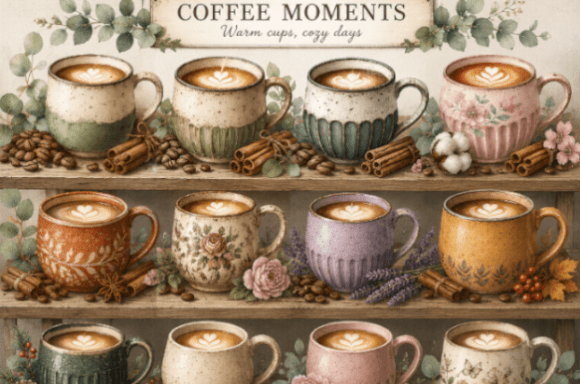
Rustic Coffee Cup and Botanical Elements
There is a distinct warmth in the visual language of watercolor that digital vectors often struggle to replicate. When you combine the earthy tones of a ceramic mug with the organic flow of eucalyptus leaves and cinnamon sticks, you create an immediate emotional connection. This specific aesthetic, captured in the Rustic Coffee Cup and Botanical Elements collection, offers more than just pretty pictures; it provides a foundational design asset for creators who want to convey comfort, authenticity, and craftsmanship. Whether you are launching a new café or simply refreshing your personal brand, these hand-painted illustrations serve as a versatile bridge between rustic charm and modern utility.
The Appeal of Hand-Painted Coffee Art
In a market saturated with sleek, minimalist graphics, the texture of watercolor stands out. The Rustic Coffee Cup and Botanical Elements collection leans into this by featuring imperfect edges, soft color gradients, and the natural variation found in real botanicals. A coffee bean rendered in watercolor feels tangible, inviting the viewer to imagine the aroma. Similarly, the inclusion of floral accents and dried herbs like cinnamon adds layers of sensory detail that a flat icon cannot achieve.
This style resonates deeply with audiences aged 20 to 50 because it taps into a desire for slow living and artisanal quality. It suggests that the product or service behind the image is made with care. For designers, this means less work convincing the audience of value; the imagery does the heavy lifting. The combination of sturdy ceramic cups and delicate foliage creates a balanced composition that feels both grounded and airy, making it suitable for a wide range of applications without feeling cluttered.
Branding and Identity for Small Businesses
For small business owners and entrepreneurs, particularly those in the food and beverage industry, consistent branding is crucial. These illustrations provide a cohesive visual identity that can be applied across multiple touchpoints. Imagine a local coffee shop using the central coffee cup illustration on their logo, while the surrounding botanical elements frame their menu board. This creates a unified look that customers instantly recognize.
- Café Menus: Use the watercolor beans and cinnamon sticks as subtle background textures or section dividers. They add visual interest without overpowering the text.
- Signage and Wall Art: Large-scale prints of the botanical arrangements can transform a plain wall into a cozy corner, enhancing the physical atmosphere of the shop.
- Packaging Design: Stickers featuring the ceramic cup can seal takeaway bags or decorate jars of loose-leaf tea, turning a simple transaction into a branded experience.
The versatility of these assets allows a bakery, a tea room, or even a home-brewing supply store to adapt the theme to their niche. By selecting specific elements—perhaps emphasizing the eucalyptus for a wellness-focused brand or the coffee beans for a traditional roaster—you can tailor the message while maintaining the core aesthetic.
Practical Applications for Digital Creators
Digital artists, social media managers, and bloggers often struggle to find high-quality assets that do not look generic. The Rustic Coffee Cup and Botanical Elements collection solves this by offering files in both JPG and PNG formats. The transparent backgrounds in the PNG files are particularly valuable for overlaying images onto photos, creating mockups, or designing complex social media graphics.
Consider the workflow for a content creator planning a "Morning Routine" series. Instead of spending hours searching for stock photos that match their lighting, they can place a watercolor coffee cup over a photo of their own desk setup. The transparency ensures the cup blends naturally with the background, while the artistic style adds a curated, editorial feel to the post. This approach saves time and elevates the perceived quality of the content.
Social Media and Marketing Graphics
On platforms like Instagram and Pinterest, visual appeal drives engagement. These illustrations work exceptionally well for quote cards, event announcements, and product launches. You might pair a motivational quote about starting the day with a cluster of coffee beans and floral accents. The soft colors of the watercolor style ensure that text remains legible when placed over the artwork.
Furthermore, these assets are ideal for email marketing headers. A newsletter from a lifestyle blog could feature a banner with the rustic cup and eucalyptus, setting a calm tone before the reader dives into the content. The key is consistency; using the same set of elements across all channels builds a recognizable brand voice.
Crafting and Physical Projects
The utility of this collection extends beyond the screen. Hobbyists, scrapbookers, and makers looking for sublimation projects will find these designs highly functional. The high resolution ensures that when printed on fabric, mugs, or paper, the details remain crisp.
- Sublimation Printing: Transfer the designs onto custom ceramic mugs, tote bags, or aprons. The rustic theme pairs perfectly with these everyday items, making them excellent gifts or merchandise.
- Greeting Cards: Combine the coffee cup illustration with handwritten-style typography to create seasonal cards for birthdays, holidays, or thank-you notes.
- Scrapbooking and Journaling: Print the individual elements to use as embellishments in bullet journals or memory books. They add a professional touch to personal layouts.
For educators and publishers, these images can illustrate children's books about daily routines or serve as decorative headers in educational materials. The non-threatening, warm nature of the art makes it accessible for various age groups.
Maintaining Consistency and Quality
While the flexibility of these assets is a strength, it requires discipline to maintain a cohesive look. When integrating Rustic Coffee Cup and Botanical Elements into a project, avoid mixing too many different styles. Stick to the color palette established in the watercolors—typically warm browns, muted greens, and soft creams—to prevent visual chaos.
When scaling images for different formats, always start with the highest resolution file available. For print projects like packaging or large wall art, ensure the DPI (dots per inch) is sufficient to avoid pixelation. If you are using the images digitally, optimize the file size for web performance without sacrificing clarity. Organizing your assets into folders by element type (cups, leaves, spices) can also streamline your creative process, allowing you to quickly assemble compositions as needed.
Ultimately, the goal is to let the artwork support your message rather than distract from it. Whether you are designing a logo, a social media post, or a handmade craft, these illustrations provide a reliable foundation. They offer a shortcut to achieving a sophisticated, artisanal look that resonates with people seeking comfort and quality in their daily lives. By leveraging these tools effectively, creators can produce work that feels both personal and professionally polished.