Black Russian Terrier Dog Sketch PNG: A Practical Guide for Designers and Crafters
For digital artists, print-on-demand entrepreneurs, and DIY crafters, the quality and versatility of source imagery are paramount. The Black Russian Terrier Dog Sketch PNG has emerged as a significant resource in this space, offering a distinct aesthetic that balances artistic charm with technical utility. Unlike standard photographs or generic clip art, this specific format provides a hand-drawn feel within a high-resolution, transparent file structure. Understanding what makes this asset unique, how it compares to other formats, and when it is the most appropriate choice can significantly impact the success of creative projects ranging from sublimation mugs to custom apparel.
Defining the Black Russian Terrier Dog Sketch PNG
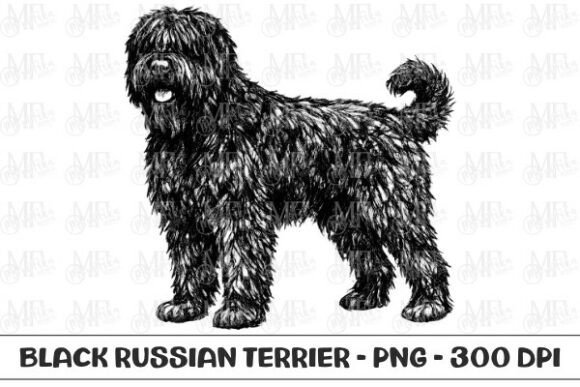
The core value of a Black Russian Terrier Dog Sketch PNG lies in its dual nature: it captures the breed's distinctive characteristics while remaining technically optimized for modern production workflows. The Black Russian Terrier, known for its imposing size, shaggy coat, and dignified expression, presents a challenge for illustrators. A sketch style simplifies these complex textures into clean lines and subtle shading, making the image more versatile than a photorealistic rendering. When delivered as a PNG (Portable Network Graphics) file, the image retains transparency, allowing it to be layered over various backgrounds without the need for tedious photo editing.
Specifically, a high-quality version of this asset typically features a resolution of 300 DPI (dots per inch). This specification is critical for physical printing. While web graphics often suffice at 72 DPI, print applications require higher density to prevent pixelation. The "watermark removed" aspect ensures that the final product looks professional, free from distracting branding that would ruin a customer-facing item. Furthermore, the inclusion of a customizable pet name field transforms a generic illustration into a personalized keepsake, adding immediate emotional value for the end-user.
Comparing Sketch Styles to Photorealism and Vector Art
When selecting an asset for a project, creators often weigh the merits of sketches against photorealistic images or vector graphics. Each format serves a different purpose and audience. Photorealistic images of Black Russian Terriers offer detail but can be rigid; they may not blend well with certain design layouts or color palettes. A photograph is bound by lighting conditions and background constraints, whereas a Black Russian Terrier Dog Sketch PNG offers a stylized interpretation that fits seamlessly into diverse compositions.
On the other end of the spectrum are vector files (such as SVG or EPS). Vectors are infinitely scalable and ideal for large-format signage or embroidery. However, they lack the organic texture and hand-drawn warmth that a sketch provides. A sketch carries a sense of human touch and nostalgia that vectors often struggle to replicate without extensive manual adjustment. For products like t-shirts, tote bags, or greeting cards where a softer, more approachable aesthetic is desired, the sketch format frequently outperforms both photos and vectors in terms of visual appeal and marketability.
- Photorealism: Best for breed identification guides or high-end photography books; less flexible for graphic overlays.
- Vector Art: Ideal for logos, vinyl cutting, and massive banners; can appear too geometric for casual crafts.
- Skinny Sketch PNG: Perfect for apparel, home decor, and personalized gifts where texture and warmth are priorities.
Technical Specifications and Production Compatibility
The utility of a digital asset is heavily dependent on its technical specifications. The Black Russian Terrier Dog Sketch PNG described here is optimized for a wide range of production methods, including Direct-to-Film (DTF), sublimation, and screen printing. The 300 DPI resolution ensures that even when printed on smaller items like coasters or keychains, the details of the dog's fur and facial features remain crisp. Lower resolution files often result in jagged edges or blurry lines, which can detract from the perceived quality of the final product.
Transparency is another non-negotiable feature for these applications. In sublimation printing, for instance, the ink is transferred onto a white substrate. If the image file includes a white or colored background box, it will print that box along with the dog, limiting design options. A transparent PNG allows the designer to place the sketch directly onto a dark shirt, a patterned mug, or a textured canvas without visual interruption. This flexibility reduces the time spent on post-processing in software like Photoshop or Canva, streamlining the workflow for busy creators.
Evaluating Use Cases and Customization Potential
The decision to use a sketch-style PNG often comes down to the intended application and the target demographic. For adults aged 20 to 50 who appreciate personalized gifts, the ability to add a pet's name is a significant selling point. A simple text overlay on a high-quality sketch creates a bespoke item that feels tailored to the owner's specific bond with their pet. This customization is particularly effective for memorial items, birthday gifts, or holiday decorations.
Consider the following scenarios where this specific asset excels:
- Apparel Design: The sketch style works exceptionally well on cotton and polyester blends used in DTF printing. It avoids the "sticker look" that sometimes plagues photographic transfers.
- Home Decor: On sublimated pillows, blankets, or framed art, the artistic nature of the sketch complements interior design trends better than a stark photograph.
- Craft Projects: For Cricut or Silhouette users, while the file itself is a raster image, the clear lines make it easier to trace if a cut-out version is needed later, or it can be printed on transfer paper for iron-on projects.
However, there are situations where this format may not be the right choice. If a client requires a logo for a veterinary clinic or a breed rescue organization that needs to be scaled up to billboard size, a vector file would be superior. Similarly, if the project demands hyper-realistic fur texture for a scientific publication, a photograph is necessary. The sketch is a stylistic choice, not a universal solution.
Weighing Tradeoffs and Decision Factors
Choosing the right digital asset involves balancing aesthetics, technical requirements, and budget. One tradeoff of using a sketch PNG is the limitation on infinite scaling. Because it is a raster image, enlarging it beyond its native resolution will eventually degrade quality. Creators must ensure the dimensions match their output needs before purchasing or downloading. Conversely, the advantage is the immediate readiness for print; no additional cleaning or background removal is required.
Another factor is the "one-file" convenience versus the need for multiple variations. Some resources offer packs containing front, side, and rear views, while others provide a single iconic pose. A single, well-composed sketch of a Black Russian Terrier is often sufficient for most merchandise designs, reducing file management overhead. However, for comprehensive brand kits, acquiring a suite of images might be more efficient in the long run.
It is also worth considering the emotional resonance of the design. The Black Russian Terrier is a powerful, loyal breed. A sketch that captures their gentle eyes and sturdy build can evoke a stronger emotional response than a generic cartoon. This emotional connection drives sales in the pet niche. Therefore, evaluating the artistic quality of the sketch—how well it represents the breed's personality—is just as important as checking the DPI.
Final Considerations for Your Creative Workflow
In conclusion, the Black Russian Terrier Dog Sketch PNG represents a practical intersection of artistry and technical functionality. It bridges the gap between the raw detail of photography and the scalability of vector art, offering a middle ground that is highly effective for small to medium-sized print runs. Its 300 DPI quality, transparent background, and potential for personalization make it a robust tool for designers looking to create meaningful, high-quality products.
While it may not replace the need for vectors in large-scale branding or photos in scientific contexts, its strengths in apparel, home goods, and personalized gifts are undeniable. By understanding its specific capabilities and limitations, creators can make informed decisions that enhance their portfolio and satisfy customer expectations. Whether you are exploring sublimation techniques, refining your DTF process, or simply looking for a new way to honor a beloved pet, this format offers a reliable and aesthetically pleasing foundation for your next project.